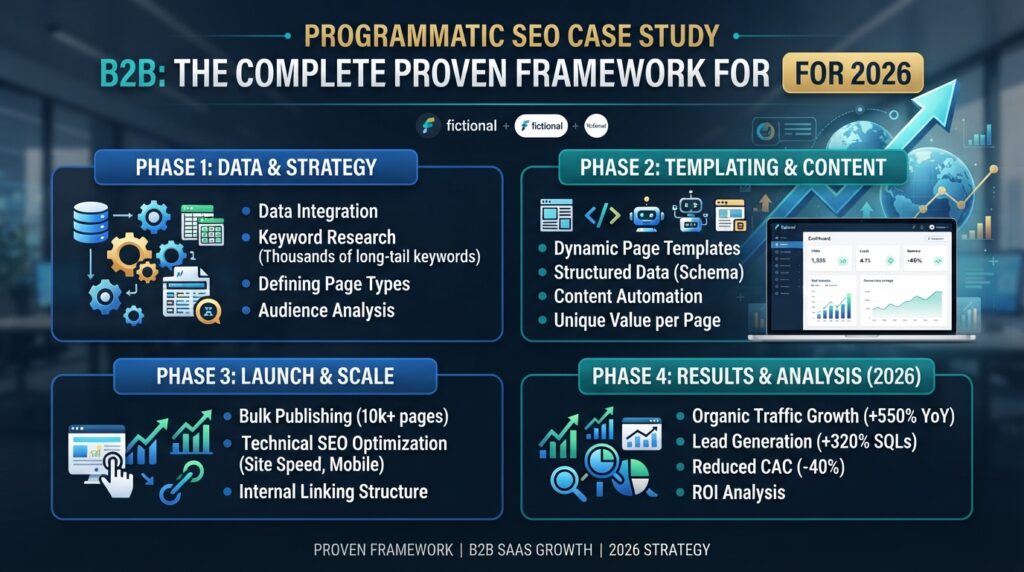
Not every large page count is a success story. A real programmatic SEO case study B2B marketers should trust needs three things: a defined page template, a measurable business outcome, and a timeline that shows the compounding curve.
Most published case studies show the traffic chart and stop there. They skip the part where 40 percent of the initial pages got deindexed for thin content, or where the sales team had to be looped in to confirm lead quality actually improved.
A credible programmatic SEO case study B2B teams reference internally should include failure data alongside the wins. If a case study only shows the upward curve, treat it as marketing material, not a blueprint.
The Content Gap Most Programmatic SEO Case Study B2B Breakdowns Ignore
Reviewing the top ranking guides on this topic reveals a pattern. They cover the “what” (templates, data matrices, no code tools) extensively, but they rarely address the “why it fails” part of the story.
Three gaps show up repeatedly across existing content:
- Almost no guide addresses what happens after a Google core update touches templated pages specifically.
- Very few connect programmatic SEO output to actual B2B sales cycles, which run weeks or months, not the instant conversions common in ecommerce case studies.
- Almost nobody explains how to keep a large template set from becoming a liability once search intent shifts.
A genuinely useful programmatic SEO case study B2B teams can act on has to close these gaps, not just repeat the Zapier and Webflow examples that already circulate everywhere.
Building the Keyword and Data Matrix Before You Publish a Single Page
Every strong programmatic SEO case study B2B companies point to starts with a data audit, not a content calendar. The question is simple: what structured data does the business already own that nobody has turned into pages yet?
For a B2B software company, that data usually lives in a few places. Integration lists, customer industries, use case documentation, and competitor comparison pages are the most common sources.
Build a spreadsheet with columns for the head term, the modifier, and the estimated monthly search volume. A typical row looks like “CRM integration” plus “for real estate agencies” plus a volume figure from Ahrefs or Semrush.
Before publishing, run each combination through one filter: would a real buyer type this phrase into Google, and would the resulting page answer their question completely on its own. If the answer to either is no, cut the row.
Template Architecture: How the Best Programmatic SEO Case Study B2B Examples Structure Pages
The template is the single highest leverage decision in this entire process. Get it wrong across a thousand pages and you multiply the mistake a thousand times.
A strong template for B2B use cases typically includes an intent specific headline, a short problem statement unique to that variant, a comparison table or data point, a customer proof element, and a clear next step for the reader.
The mistake most teams make is copying 90 percent of the page and only swapping the variable in the H1. Google’s helpful content systems are built specifically to catch this pattern, and any programmatic SEO case study B2B teams study closely will show pages that got penalized this way.
The fix is giving each page a genuinely unique data point. Pull real usage statistics, integration counts, or industry specific numbers instead of relying on generic boilerplate text around a swapped keyword.
Technical Infrastructure That Separates Scalable Pages From Thin Content Penalties
Scaling a few hundred pages is a content problem. Scaling a few thousand is an engineering problem, and this is where most in house teams underestimate the work involved.
Crawl budget matters here. If Googlebot cannot efficiently reach and re-crawl your templated pages, indexing lags badly no matter how good the content is.
Internal linking, XML sitemap segmentation, and canonical tag hygiene all need attention before launch, not after. A programmatic SEO case study B2B teams cite as a cautionary tale almost always traces back to one of these technical gaps rather than the writing itself.
Site speed also compounds at scale. A half second delay on a template multiplied across five thousand pages creates a measurable crawl and ranking drag that a single slow page never would.
Internal Linking and Topical Authority for B2B Growth Teams
Pages built from a template need a hub. Without one, search engines see thousands of disconnected leaves instead of a coherent topic cluster.
A pillar page, similar to this one, should link out to the templated variants, and each variant should link back up to the pillar and sideways to two or three closely related pages. This structure signals topical depth rather than page count for its own sake.
For a company like auracoredigital.com, this is exactly the kind of architecture built into client SEO programs, connecting service pages, case studies, and templated content into one authority signal instead of isolated URLs competing with each other for the same rankings.
Measuring Pipeline, Not Just Traffic: The Metric Most Case Studies Skip
Traffic charts are the easiest thing to screenshot, which is why nearly every published example leads with one. But a B2B buyer’s journey rarely converts on a single visit.
The metric that actually matters is assisted pipeline: how many opportunities in the CRM had a templated page somewhere in their touchpoint history. This requires connecting analytics to a CRM like HubSpot or Salesforce, something most published case studies skip entirely.
A genuinely useful programmatic SEO case study B2B sales and marketing leaders can both trust needs this connection built in from day one, not retrofitted six months into the project.
Common Failure Points in Programmatic SEO B2B Rollouts (And How to Avoid Them)
The most common failure is publishing volume before validating a single winning template. Teams launch two thousand pages at once, and if the template underperforms, they have two thousand problems instead of one.
The second common failure is ignoring search intent drift. A modifier that made sense at launch, like a specific industry name, can lose relevance as the market shifts, leaving stale pages that quietly drag down the domain’s overall quality signals.
The third failure is treating this as a set and forget project. Every credible programmatic SEO case study B2B teams should study includes an ongoing pruning process, removing or consolidating pages that never gained traction after four to six months.
GEO and AI Overview Citations: The New Layer Every Programmatic SEO Case Study B2B Needs
Search behavior has shifted. Buyers now get answers directly inside Google AI Overviews, ChatGPT, and Perplexity before they ever click a traditional blue link.
This changes what a page needs to earn a citation. Clear definitions, direct answers near the top of the content, and specific data points formatted in tables or lists all increase the odds of being pulled into an AI generated answer.
Any programmatic SEO case study B2B teams build in 2026 should be evaluated not just on organic rankings but on whether the templated pages get referenced inside generative answer engines, since that visibility increasingly drives the first brand impression a buyer gets.
A 90 Day Rollout Plan Based on Real Programmatic SEO Case Study B2B Results
Weeks one through three: complete the data audit, build the keyword matrix, and design one template variant to test against a small batch of ten to twenty pages.
Weeks four through eight: review indexing rate, engagement, and any early ranking movement. Refine the template based on what search engines and readers actually respond to.
Weeks nine through twelve: scale to the full page set, connect CRM tracking, and set a recurring quarterly review to prune underperforming pages and refresh data points across the template.
Actionable Summary and Key Takeaways
- A credible case study shows failure points, not just the upward traffic curve.
- Start with an audit of data the business already owns before writing a single page.
- Templates need genuinely unique data per page, not just a swapped keyword in the headline.
- Technical infrastructure, especially crawl budget and internal linking, determines whether pages get indexed at scale.
- Pipeline and CRM data matter more than raw traffic for B2B outcomes.
- AI Overview and GEO visibility are now a required success metric, not an optional bonus.
- A staged 90 day rollout beats launching thousands of pages at once.
- Ongoing pruning is what separates a lasting content asset from a slowly decaying one.
Ready to Build Your Own Programmatic SEO Case Study With Aura Core Digital
Reading about a programmatic SEO case study B2B companies have already run is useful, but building your own requires a team that has done the technical and editorial work firsthand.
Aura Core Digital works with B2B and SaaS companies across the United States to design, build, and measure programmatic SEO programs that connect directly to pipeline, not just traffic dashboards.
If your team is evaluating whether this approach fits your business, get in touch with Aura Core Digital for a strategy review, or explore our full SEO services to see how the framework above gets applied to a real domain.
Frequently Asked Questions
What is a good example of a programmatic SEO case study B2B companies can learn from?
Zapier remains the most widely referenced example, ranking for well over a million keywords primarily through templated integration pages rather than manual blog content.
How long does it take to see results from a programmatic SEO rollout?
Most B2B programs see meaningful indexing and ranking movement within eight to twelve weeks, though pipeline impact typically takes two to three additional months to show clearly in CRM data.
Can a small B2B marketing team run a programmatic SEO program without a dev team?
Yes, current no code tools make this achievable for a lean team, though technical SEO fundamentals like crawl budget and internal linking still need dedicated attention regardless of team size.