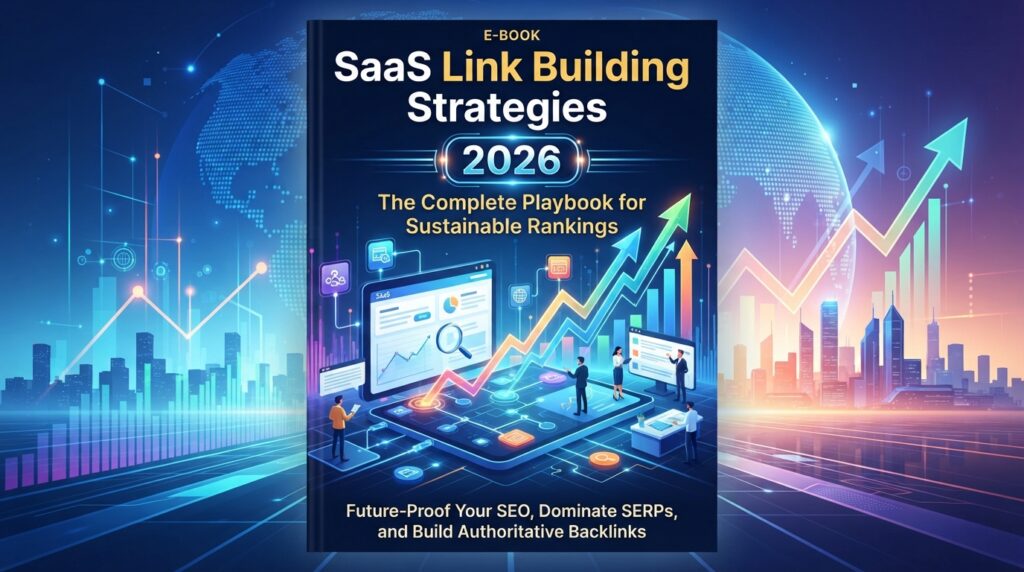
SaaS link building strategies 2026 look different from anything that worked even eighteen months ago, and most software companies are still running the same outreach playbook that stopped producing results a year ago. Google’s algorithm now weighs trust signals, brand mentions, and topical authority far more heavily than raw link volume. At the same time, AI search tools like SearchGPT and Perplexity are pulling citations from a completely different set of sources than traditional organic rankings ever relied on.
This guide breaks down what is actually working right now for U.S. SaaS companies competing against review platforms, aggregators, and each other for the same search real estate.
Why Old SaaS Link Building Playbooks Stopped Working
Mass outreach emails, paid guest post networks, and generic web directories used to move the needle. They do not anymore.
Google’s own guidance on link spam has tightened enforcement around manipulative link schemes, and software companies that lean on volume tactics tend to see rankings stagnate or drop after a few months. Any serious approach to SaaS link building strategies 2026 has to start from a different assumption: quality, relevance, and context now outweigh quantity.
The SaaS niche is also uniquely competitive. Software brands are not just competing against direct rivals. They are competing against G2, Capterra, TechRadar, and dozens of review aggregators that already dominate branded and comparison search terms.
What Actually Counts as a Strong Backlink in 2026
Not every link carries equal weight, and treating them as interchangeable is one of the fastest ways to waste a marketing budget.
A backlink worth pursuing in 2026 usually comes from a site with real organic traffic in your niche, places your link inside relevant surrounding content, and comes from a domain your buyers already trust. Backlinko’s research into millions of search results consistently shows that top ranking pages carry meaningfully more referring domains than pages stuck on page two, which is exactly why backlink quality remains foundational to SaaS link building strategies 2026.
Referring domain count, linking page traffic, and contextual placement matter more than raw domain rating scores.
Digital PR and Data Driven Studies
Original research is one of the most reliable SaaS link building strategies 2026 has to offer, because journalists and bloggers need fresh data to cite.
Running a small industry survey, publishing a benchmark report using your own product data, or analyzing publicly available datasets in your niche gives outlets a reason to link back to you as the primary source. This works especially well for SaaS companies sitting on usage data nobody else has access to.
A single well-placed digital PR story can generate dozens of organic citations over time without any additional outreach.
Product Led Linkable Assets That Earn Links Passively
Free tools, calculators, templates, and dashboards are quietly one of the highest leverage SaaS link building strategies 2026 rewards, because they keep earning links long after launch.
Instead of a one-time blog post, a free ROI calculator or a template library solves an ongoing problem for your audience. Other sites reference it in listicles and resource roundups for years, not weeks.
The tradeoff is upfront build cost. A useful calculator or interactive tool takes real product or design effort, but it becomes a compounding asset instead of a single campaign.
Strategic Guest Posting Without Hurting Your Rankings
Guest posting is still part of most SaaS link building strategies 2026 campaigns, but the execution bar has risen sharply.
Publishing thin, generic guest content on low value blogs can actively hurt a domain rather than help it. The sites worth targeting are ones with genuine readership in your exact niche, not sites that exist purely to sell placements.
Anchor text should read naturally and point to genuinely relevant pages, such as a specific product feature or a deep resource page, rather than always pointing at the homepage.
Integration and Partnership Links
Every SaaS product that integrates with other tools has a natural, underused link opportunity sitting in its own partner ecosystem.
Getting listed on an integration partner’s marketplace page or app directory earns a highly relevant, hard to replicate backlink. It also puts your brand in front of an audience that is already using complementary software, which tends to convert better than cold traffic from a generic guest post.
This channel rarely gets the attention it deserves inside broader SaaS link building strategies 2026, largely because it requires coordination with a partnerships or product team rather than marketing alone.
Winning Citations in AI Overviews and AI Search Tools
Backlinks now influence more than traditional rankings. They shape whether your brand gets cited inside AI generated answers on tools like SearchGPT and Perplexity.
These systems tend to pull from the sources that show up most consistently across listicles, third party guest posts, forums, and video platforms like YouTube. A single authoritative mention rarely moves the needle here. Consistent presence across many trusted sources does.
This is why product review link building, including sending free product access to niche bloggers or YouTubers in exchange for an honest review, has become a bigger part of SaaS link building strategies 2026 than it was even a year ago.
Broken Link Building and Competitor Gap Analysis
Finding broken links on relevant industry pages and offering your own resource as a replacement remains one of the most underrated SaaS link building strategies 2026 has available, mostly because almost nobody does the outreach well.
Tools that crawl competitor backlink profiles can also reveal exactly which sites link to rival SaaS products but not to you. That gap list becomes a targeted, high relevance outreach queue instead of a cold list of random blogs.
This approach takes more manual research than mass outreach, but the acceptance rate is dramatically higher because you are solving a real problem for the site owner.
Building a Realistic 90 Day Link Building Roadmap
Results from any of these SaaS link building strategies 2026 tactics rarely show up in the first two weeks, and setting that expectation early avoids a lot of frustration internally.
A workable timeline looks like this: weeks one and two for competitor research and asset planning, weeks three through six for content production paired with outreach, and month two through three for digital PR and partnership outreach at scale.
Bootstrapped SaaS companies typically see the fastest early wins from product led assets and guest posts, while funded companies can layer in paid PR and partnership development sooner.
Common Mistakes That Waste Link Building Budget
Chasing domain rating scores instead of actual relevance is the single most common mistake teams make when running SaaS link building strategies 2026 campaigns.
A handful of well placed, highly relevant links from smaller niche sites regularly outperforms dozens of high authority but irrelevant placements. Teams that measure success purely by link count instead of referral traffic and ranking movement tend to burn budget without seeing proportional growth.
Slow page speed, cluttered site architecture, and poorly presented content also quietly kill outreach acceptance rates before a single email even gets sent.
Key Takeaways
- Link quality, relevance, and context now matter more than raw link volume or domain rating.
- Digital PR built on original data remains one of the highest ROI SaaS link building strategies 2026 supports.
- Product led linkable assets like calculators and templates earn backlinks passively over years.
- Guest posting still works, but only on genuinely relevant sites with real readership.
- Integration and partnership pages are an underused, high relevance link source.
- AI search tools like SearchGPT and Perplexity reward consistent brand presence across many trusted sources.
- Broken link building and competitor gap analysis produce higher acceptance rates than cold outreach.
- Realistic timelines run 6 to 12 weeks for early movement and 3 to 6 months for compounding results.
Ready to Build a Link Profile That Actually Moves Rankings
Running effective SaaS link building strategies 2026 in house takes research bandwidth, outreach infrastructure, and content production most SaaS marketing teams do not have spare capacity for.
Aura Core Digital works directly with SaaS and software companies to plan, execute, and report on link building campaigns built around real relevance instead of link volume. If your current backlink profile has stalled or your organic traffic has plateaued, our SEO services team can audit what is holding your rankings back.
Get in touch with Aura Core Digital to talk through a link building plan built specifically around your product, your audience, and your growth stage.
Frequently Asked Questions
How long do SaaS link building strategies 2026 take to show results?
Most campaigns need 6 to 12 weeks before early movement appears, with real compounding impact on rankings and organic traffic typically showing up between three and six months.
What is the biggest mistake SaaS companies make with link building?
Chasing domain rating instead of relevance is the most common error. A smaller number of highly relevant, contextual links consistently outperforms a large volume of generic, unrelated placements.